Today is the shortest day of the year, so let’s take a quick look at brevity.
German designer Dieter Rams, who inspired Apple designer Jonathan Ive, believed in the idea of less but better. What works in the design of products can also apply to communication.
In today’s era of gnat-length attention spans, brevity is even more important than ever, but simply shortening your message without improving it will fail. (Sometimes less is less.) In telling stories, one vivid detail trumps a lot of boring detail. In selling, one unique differentiator that the customer values will trump a long list of features. One well-designed chart can replace several minutes of explanation.
Just a few words can pack a tremendous punch. Supposedly, Hemingway was at lunch with several writers and claimed he could write a short story in just six words. Bets were made, and Hemingway scrawled on a napkin:
Trust between individuals is one of the most essential and important ingredients of personal influence. If motivation is the fuel of persuasion, trust is its lubricant. Trust lowers risk; it opens communication; it makes decisions more efficient and effective.
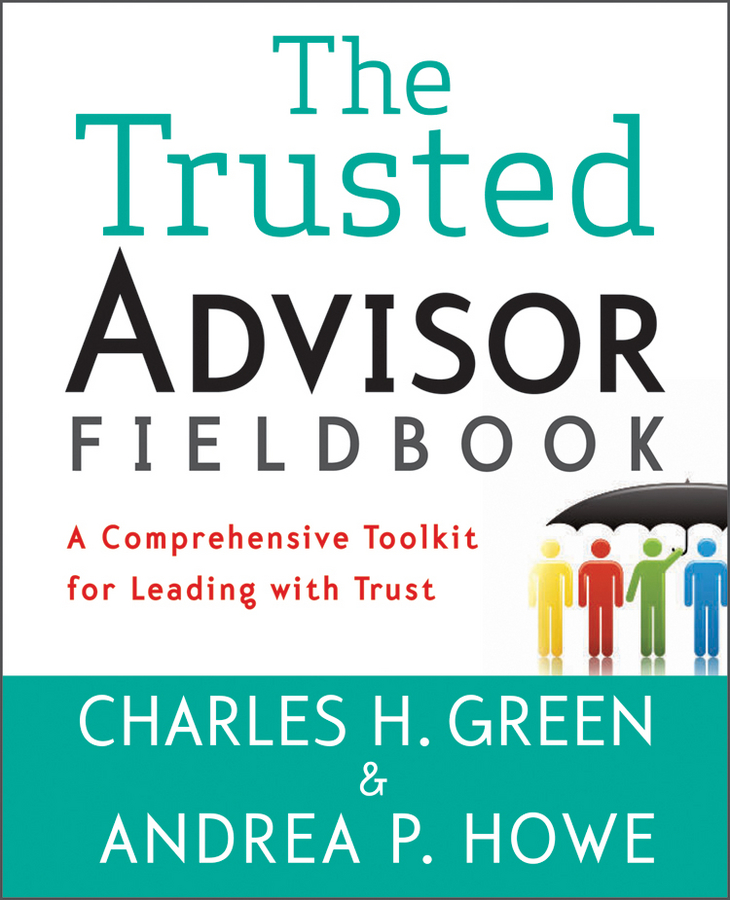
Of course, you don’t need a book to tell you that. The critical point is that trust is also within your control, and this excellent book by Charles H. Green and Andrea P. Howe shows you how to establish, accelerate, and maintain it.
Whether or not you are in sales, you exert influence and make a difference in others’ lives when they take your advice—but even if you are always right it’s no guarantee that people will take you advice. (And you don’t have to have teenage kids for this to be true.) As the authors tell us, you have to earn the right to be right.
The Trusted Advisor Fieldbook shows you how by opening up the black box and exposing how the process works so that you can become more trustworthy to others. It then goes into specific practical detail on how to apply the trust principles in everyday situations, from different aspects of the sales cycle to personal and organizational relationships.
Most “how-to” books such as this provide value on three levels:
Things you already “know” you should do but need reminding or prompting to do more of
Things you kind of know how to do, but get expert instruction on how to do it better
Things you thought you knew, but were wrong
The fieldbook has a lot of material in the first category, but to me the most important reminder is worth quoting at length:
“The goal of traditional selling is to convince the buyer to buy from you—the goal of trust-based selling is to help the buyer do what is right for him. The difference is a question of focus and motives. Helping, as distinct from closing, is other-focused, nonmanipulative and trust-enhancing.”
I believe this quote could encapsulate the entire book, and because one of my pet causes is the professionalization of selling, I urge any salesperson reading this article to print this and post it somewhere that you can see it before any communication with a client or prospect. Even if you’re not in sales, change the words slightly and they will apply equally to you.
In the second category, there are a number of specific situations, including presenting, selling to the C-Suite, and negotiating, where they give useful advice and excellent insights. Most importantly, the examples of the phrases they provide to illustrate their points ring true, and demonstrate that the authors have very deep experience in these areas.
As to the third category, I pride myself on being right, and this is awkward to admit, but I may have to reconsider my traditional advice to keep price out of the discussion until the end. The authors make a convincing case that this just adds to the tension and angers the potential buyer; it’s best to let the buyer control when the topic comes out in the discussion.
Finally, I like the format of the book. In the form of a fieldbook, it provides numerous questions, forms and suggestions to think further about how to apply their ideas to your own particular situation. The “list of lists” at the end is also helpful; I found it easier to read them before beginning a new chapter.
I trust you will get a lot of value out of this book.
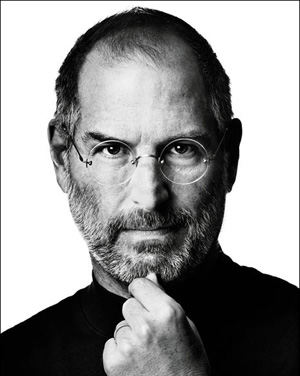
I’ve just finished reading Walter Isaacson’s biography of Steve Jobs, but this is not a traditional book review. Here’s the review part: the book is fascinating; read it.
What I found most fascinating about Jobs was how one person could simultaneously serve as a terrible and a great example for others. Steve Jobs was one of the great persuaders of the business world, which is all the more remarkable considering he consistently violated some of the most fundamental principles of influence and persuasion.
Regular readers of my blog will know that I strongly urge you to use outside-in thinking: the most effective way to persuade is to put yourself in the other person’s shoes and try to see how you can help them get what they want. Well, Jobs didn’t do much of that. He could be incredibly self-centered and egotistical. When presented with a new idea, his default mode was to say, “That’s stupid.”
He did not believe that the customer was right. In his own words: “Some people say, ‘Give customers what they want.’ But that’s not my approach. Our job is to figure out what they’re going to want before they do… Our task is to read things that are not yet on the page.”
He often let his personal needs override good business sense. In fact, a lot of what he did in business was actually against the customer’s interest. When he designed the Macintosh, he directed that the interior of the case be finished as beautifully as the exterior, even though no one except a technician would ever see it. He spent hundreds of thousands of dollars and held up production of NeXT computers because he insisted that the machines in the factory be painted and repainted in the colors he chose. Why is that against the customer’s interest? Because anything that adds costs but does not benefit the customer is waste.
He could be exquisitely sensitive to what made others tick, which is a wonderful talent for communication, except that Jobs would often use this ability to hurt people. As Isaacson said, he could deliver a “towel snap” at people and say just the right thing that would get under their skin.
He cared little for making others feel good. He fought his iPod team for months as they tried to convince him to license iTunes to Windows. When he finally agreed, instead of graciously conceding that they were right, his words were: “Screw it, I’m sick of listening to you assholes. Go do whatever the hell you want.”
He lied. He would often tell someone their idea was stupid, only to turn around a week later and claim it as his own.
How did he become so persuasive with all these faults?
The only reason Jobs could break all the rules of persuasive communication and succeed so spectacularly was because his faults were more than offset by towering strengths.
The reason Jobs could ignore market research and yet change entire industries was that he had the artistic sense and the taste to pull it off. Bill Gates said in a joint interview that he wished he had Steve’s taste.
The central principle of his taste was simplicity. Jobs was always looking for ways to simplify the look and the user experience of his products. Simplicity focuses your mind; it forces you to drill down to the essence of what you’re trying to communicate, and that adds power to messages just as it does to products. It’s not just “less is more”—I love the line in the book which quotes Dieter Rams, the designer for Braun: “Less but better.”
His vision of what he wanted was harnessed to a passion for perfection that drove the invention of beautiful, elegant products that are more than mere devices, that inspire love and loyalty from their owners. His quest for perfection would sometimes cause him to scrap months and millions of dollars worth of work because he did not see it going the right way, as he did with Pixar’s first cut of Toy Story.
His pure passion could be virulently contagious and inspire others to drop their reservations and follow his lead. When he was trying to court musicians to the iTunes model, he brought over Wynton Marsalis to his house to show off iTunes. Marsalis later said, “I don’t care much about computers, and kept telling him so, but he goes on for two hours. He was a man possessed. After a while, I started looking at him and not the computer, because I was so fascinated with his passion.”
His passion for perfection drove him to obsessively rehearse and refine his presentations so that they became hugely anticipated events. Although they looked effortless and natural, every detail was meticulously planned, staged, and practiced over and over.
His sensitivity that he often used to hurt people could also be turned to get people to do things they did not want to do. He knew how to get the best out of people by appealing to what mattered to them most. When John Sculley wavered in his decision about whether to leave Pepsi to run Apple, Jobs said, “Do you want to spend the rest of your life selling sugared water, or do you want a chance to change the world?”
Extraordinary taste, simplicity, passion, preparation and sensitivity helped Jobs got away with all of his bad behavior. Except for taste, each of those is a skill that can be improved with awareness and practice. Pay attention to his faults as well, and stay as far away from them as possible. He never put a license plate on his car, either, but that doesn’t mean you can get away with it.
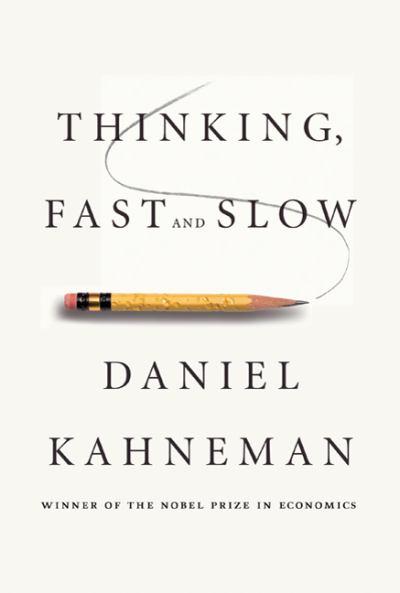
One of the highlights of my intellectual life was discovering the work of Daniel Kahneman and Amos Tversky, in a book called Against the Gods, by Peter Bernstein. Since then, I’ve read some of his more scholarly work and have come across his name in dozens of books about thinking and decision-making. So, when I learned that he had written Thinking, Fast and Slow, I was eager to get it and am happy to be one of the first to recommend it.
As a fan of his work, it’s a sure bet that I am biased, but as a student of his work I have taken special pains in this review not to let that bias affect my thinking. Fortunately, this time both my intuition and reason agree that it is an important book for anyone who wants to learn more about the complexities and oddities that characterize our thinking, perceptions, and decision-making.
The key theme of the first section of the book is that we all have two currents of thought running simultaneously in our heads. Think of a hybrid engine, which runs quietly on electrical power in leisurely driving but requires gasoline power for surges of performance. System 1 thinking is equivalent to the electrical power. It’s fast and effortless and mainly runs below the level of our consciousness. System 2 is slower, more logical, and often difficult to use.
Clear thinking is hard to do and rarer than we think. Our brains use a disproportionate share of our energy resources, so we’ve evolved brains that conserve mental energy as much as possible. One of the ways we do this is by taking mental shortcuts (heuristics) to quickly arrive at “good enough” answers for most of life’s questions and challenges. System 1 generally serves us well.
Except when it doesn’t. In complex situations those shortcuts can take us in the wrong direction. When faced with a difficult question to answer, one of our most common shortcuts is to substitute an easier question. For example, the question: “Will this multimillion dollar investment deliver an ROI that exceeds our hurdle rate?” often becomes, “Do I trust this person who says it will?”
You can see the obvious implications for persuasion, regardless of which side of the persuasion attempt you’re on.
Another important idea is What You See Is All There Is, (WYSIATI). Even when we don’t have complete information to answer the difficult question, we often treat the information we have as all we need. One consequence of this is the halo effect, in which a salient judgment about a specific person carries over into other judgments. For example, people who are perceived as good-looking tend also to be seen as more intelligent, capable, etc.
We are remarkably good at some types of judgments, such as inferring the intentions of another person from a momentary glance. But we are also bad at other types of judgments, such as statistical thinking and some economic choices. In the second main section of the book, Kahneman shows us how our judgments deviate from the utility-maximizing “best choices” that economists tell us we should make.
I’ve written before about loss aversion and framing effects because of their close connection with persuasion. So often, it’s not the choice that makes the difference, but how the choice is described. For example, consider the following scenario.
A person with lung cancer can choose between radiation and surgery. Surgery has a better record for long term survival, but it is riskier in the short term. In studies, participants were given either of the following two descriptions:
The one-month survival rate is 90%.
There is 10% mortality in the first month.
Which would you choose?
Participants in the studies chose surgery 84% of the time when the first choice was posed, and only 50% chose it in the second frame. The choices are exactly the same, but the description makes a big difference. Disturbing, but maybe not surprising.
What was most surprising about the studies is that the framing effect applied equally to physicians as to the general population.
What makes so many of these errors especially sinister is that we are overconfident in our own certainties and abilities. In fact, often the people who are most wrong are in the worst position to know it.
As you can see, education is not enough of a guard against irrationality. It would be nice if Kahneman would have given us some practical advice on how to improve our judgments, but he tells us that “little can be achieved without a considerable investment of effort.” If you read this book, you will at least be in a better position to recognize situations where you should be on your guard and should make the extra mental effort to think through the choice.
There are many excellent books that have come out in recent years, but most of them are based on the original thinking and research done by Daniel Kahneman, so why not go directly to the source? Most people I talk to have never heard of Kahneman, and I didn’t want to tell you more about him until you had a chance to react first to some of his ideas. I guess I should mention that he is the only psychologist ever to have won the Nobel Prize for Economics.
In this brief review, I’ve only scratched the surface of the dozens of examples of the ways our thinking can go astray. Although most of the judgments and choices we make turn out alright, sometimes we need the extra horsepower that System 2 can provide. Any serious student or practitioner of persuasion—or of thinking clearly and resisting persuasion—should read and re-read this book.