Category: Persuasive communication

  • Stories Are Not Evidence

    Great story; don’t mind the facts.

    Stories are all the rage in business persuasion today. Everyone loves stories. I love stories, and have written several posts about how they can be so helpful in ensuring your message gets heard, believed and remembered.

    Being of a slightly contrarian frame of mind, however, I think it’s important that we remind ourselves that stories do have limits, and excessive reliance on them can weaken our persuasive efforts, especially when our listeners start probing a little deeper to find the real truth behind them.

    There are three possible ways that a story can mislead:

    The story may be untrue or exaggerated

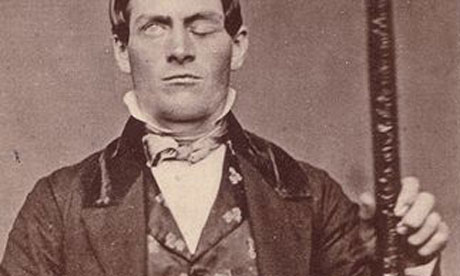
    One of the best examples of this for those who are familiar with psychology is the story of Phineas Gage, the railroad company foreman in the 19th century who was impaled by an iron rod. Gage’s accident took out all or part of his left frontal lobe, and the prevalent story is that it turned him from a likeable and effective person into an unstable and angry man. Almost any book that deals with the role of emotions cites this story to show how important emotions are to a normal, stable life.

    It’s a vivid and compelling story, but as this article explains, most of it is not true. Gage went on to lead a reasonably normal life, working successfully in occupations that would have punished erratic behavior. In fact, the story about the story is a cautionary tale about how a few facts can be spun into a convincing story that can be used to “prove” almost any point we want to make.

    Stories are always incomplete

    By design, stories simplify real life; nuance and complexity get in the way of a good story. Good storytellers know that they have to keep them short and focused, so they omit details that do not contribute to the main point. That’s not a bad thing, unless the omitted details substantially alter the conclusions drawn.

    Think back to any of the three presidential debates we’ve just seen: both candidates chose stories to tell about their opponent. They didn’t have to lie (although fact-checkers on both sides will assert that the other one did), they just had to choose which facts to leave out.

    The story may be true, but insufficient.

    This is one of the most common ways that stories can mislead. It is especially true as the story gets more vivid or compelling. We see it all the time in the media. A savage and shocking crime feeds the perception that a much bigger problem exists, leading to a demand for more law enforcement or for new legislation. Because stories draw us in, we focus on the specific details, which distracts from the larger picture: maybe this situation is not that common.

    Don’t throw out the baby with the bathwater

    Please don’t assume from what I’ve written that I am against the use of stories in presenting your ideas. Stories are a powerful and indispensable tool in any persuader’s kit, but they should never be used alone. Stories and other forms of evidence work best when they support each other. Stories can dramatize statistics, for example, and statistics can prop up the truth of a story. Used together, each is much the stronger for it.
  • How Romney Won Round 1

    I don’t agree with pundits who said before last night’s debate that Romney had to win. As the challenger to a sitting president, all Mitt Romney had to do to win last night was simply to keep from losing. The ethos that the office itself brings to the incumbent, and Obama’s own reputation for eloquence, are tremendous advantages. So, the major goal of a challenger is to be perceived as being in the same league, and for that you only need a draw.

    He easily accomplished that objective, and went even further, emerging as the clear winner of Round 1. How did he do it?

    To avoid losing, any competitor must defeat the opponent’s strategy. The Obama strategy against Romney has three principal lines of attack:

    1. He is an extremist
    2. He is uncaring and out of touch
    3. His policies are fluff—no detail

    Extremist? Romney had to show he is a reasonable person, and he accomplished this through his demeanor and his words. His demeanor was confident yet respectful, and he never once lost that hint of a smile, even when being attacked. He went out of his way on several occasions to stress his points of agreement with the President and even to praise some of his decisions and policies. When he did attack, it was directed against the policies, not the person. He cited his own success in working with an overwhelmingly Democratic legislature in Massachusetts.

    Uncaring? Romney actually used more personal anecdotes than Obama to show that he had listened to ordinary people and even though he never used Clinton’s “feel your pain” line, he used words such as crushed and hurting.

    No detail? This is where Romney had the clearest advantage. His answers were detailed and specific, and in delivering them he showed an impressive grasp of detail and memory. At one point, I thought he was going to have a Rick Perry moment, when he said, “The fourth thing is…” and his eyes rolled upward, but he pulled it out. Too much detail can definitely be a liability, but in this situation it was the right thing to do. We all know about Romney’s impressive record, but last night was the first time he showed the personal qualities that made that record possible.

    To be sure, Romney also had some good fortune in the form of Obama’s performance last night. People will debate whether he was overconfident, or trying too hard to be his usual cool self, or just not as good in unscripted situations as he is behind a teleprompter, but he clearly left a lot on the table last night.

    That said, Romney did one other thing that put him over the top. Like a fighter who attacks an opponent’s clear weakness, he stayed relentlessly on message, keeping to his key theme of job creation all night.

    Round 2 is going to be so much fun! Will Obama come out swinging? Will Romney’s inexperience in foreign policy be an insurmountable obstacle?

    Having said that, I have to say it was a pleasure to watch two intelligent and articulate individuals go at it last night. This was a debate I would not be embarrassed to have foreign audiences watching.

  • Rhetoric: Who Needs it?

    Still relevant

    What possible use does the ancient art of rhetoric have in the twenty-first century? Although rhetoric was once an indispensable part of any real education, it began to go out of style in the 19th century, and is rarely taught in colleges today. If fact, the term itself has become mostly derogatory, signifying ornate, empty and manipulative language.

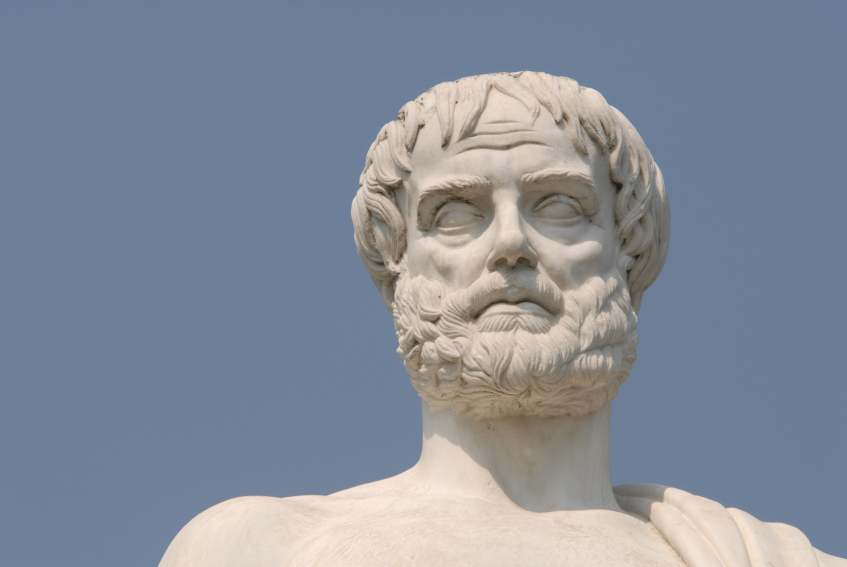
    Fortunately, there are still a few people such as Sam Leith keeping the flame burning. His book, You Talkin’ to Me?: Rhetoric from Aristotle to Obama shows us that rhetoric does not have to be ornate, formal language, nor is it only empty wordsmithing. In fact, as Leith says, the only time we use rhetoric as a pejorative is when the rhetoric is obvious. Any time a person uses language to influence another, they are using the time-tested tools of rhetoric, and so much of what has been written about presentations and persuasive communication (including my own material), is a restatement or an elaboration of what Aristotle, Cicero, and Quintilian wrote so many centuries ago. The only reason we still recognize those names today is because they were so good at it, and because they knew how to pass on their knowledge to others so well.

    Aristotle was the first to give us a written definition, and you can’t get any more clear or comprehensive that it: finding the available means of persuasion.

    Rhetoric covers five major subjects, and they are still useful today, whether you are selling a product, trying to get an idea approved internally, or running for President.

    Invention: Finding the right arguments. What is the approach that is likely to work for this audience, for this particular decision at this time? As you can see, it’s not just about what you see as the best reasons, but about what will resonate with the other person. The right approaches usually require some combination of ethos, logos and pathos. In more modern terms, we might use Daniel Kahneman’s System 1 and System 2 thinking, but we have to appeal to both. When candidates try to encapsulate their campaign into a slogan, that’s invention.

    Arrangement: There are various ways to arrange your material for best effect. Aristotle preferred the simple approach of just two main parts: in the narrative, you lay out the issue at question; then in the proof you give the reasons why your idea is superior. Other manuals recommended up to six parts, but the main thing is that a clear structure helps you think clearly and makes it easy for the audience to follow.

    Style: How do you say it? Style seems to command most of the attention today. Most of the negative perception around rhetoric applies to the grand style, with big words and flowery sentences. Most of us prefer speakers who are authentic and use clear and plain language. But Barack Obama showed that we can still respond to the high style on the right occasion. The most effective speakers match their style to the audience and the occasion.

    Memory: in ancient times, speakers were expected to speak at length without notes, and had to learn mnemonic techniques to make sure they could remember it all. Of the five subjects, memory may seem to be the least relevant today, but the way that speakers so often use slides as a crutch suggests that they may benefit from it.

    Delivery: In today’s attention-deficit world, delivery is extremely important, because it’s the only way to maintain an audience’s attention long enough to persuade them. We no longer have to worry about projecting our voices to be heard by hundreds, but we still have to appear confident, open, and in control.

    I suppose you don’t have to study formal rhetoric to be an excellent speaker and persuader, but why not learn from the best?

  • A Rhetoric Lesson in an Unlikely Place

    When the famous Greek orator Demosthenes was asked what was the most important aspect of rhetoric, he replied, “Delivery, delivery, delivery.”

    That’s a sentiment that I would not normally agree with. While I certainly believe that delivery is important, I’ve always stressed that strong content backed by appropriate evidence is absolutely the most important aspect of any persuasive presentation. If you don’t have solid content the best delivery in the world won’t make you persuasive.

    But I received an unexpected education in practical eloquence this afternoon in the unlikeliest place. I was just getting out of my vehicle at the gas station when a man approached. I knew right away that he was going to ask for money and I prepared to give him the cold shoulder. But his opening line took me by surprise: “Excuse me sir, I’m sorry to intrude on your privacy.” He then proceeded to go into one of the familiar stories about a lady with a baby in the parking lot next door who did not have money for gas. That’s usually when I tell them I can’t help them, but his manner and vocabulary captivated me. He was so courtly and articulate that—as a person who values eloquence and verbal artistry—I just enjoyed listening to his pitch.

    I decided to give him a few bucks but found that I only had twenties in my wallet. Being of Scottish descent, I may value eloquence but not to the tune of $20, so I told him I didn’t have change. I wish I could remember his exact words, but his reply was so good that I actually went into the convenience store and bought a candy bar so I could make change!

    As I drove away, it occurred to me that I had just met a true artist, a real master of delivery. I knew his story was bogus, but I felt good about the few bucks I gave him. It’s like a magic trick: you know it’s not real but you appreciate what you’ve seen.

    I wonder if I could go back and find the guy? Maybe he can write a blog post for me.